
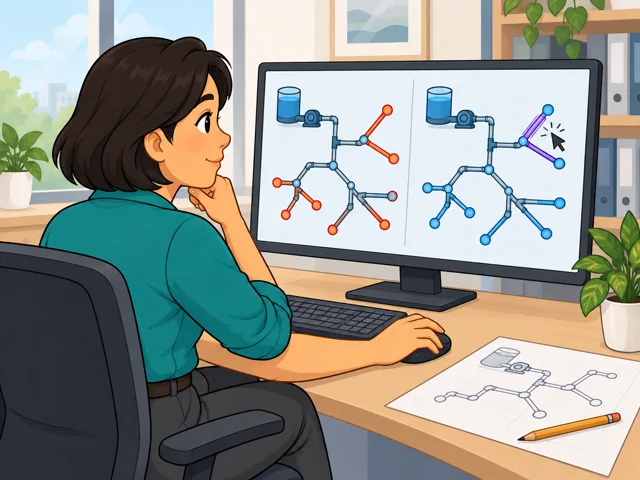
Model fixes before anything's built
Model the water network, find where pressure drops, and see whether a pipe or pump change helps.
Career profile
Water/wastewater engineers design pipes, pumps and treatment for drinking water and releasing or reusing wastewater.
Why does water pressure sag in just one neighborhood? A software model lets you test the likely causes, then figure out which fixes would help.
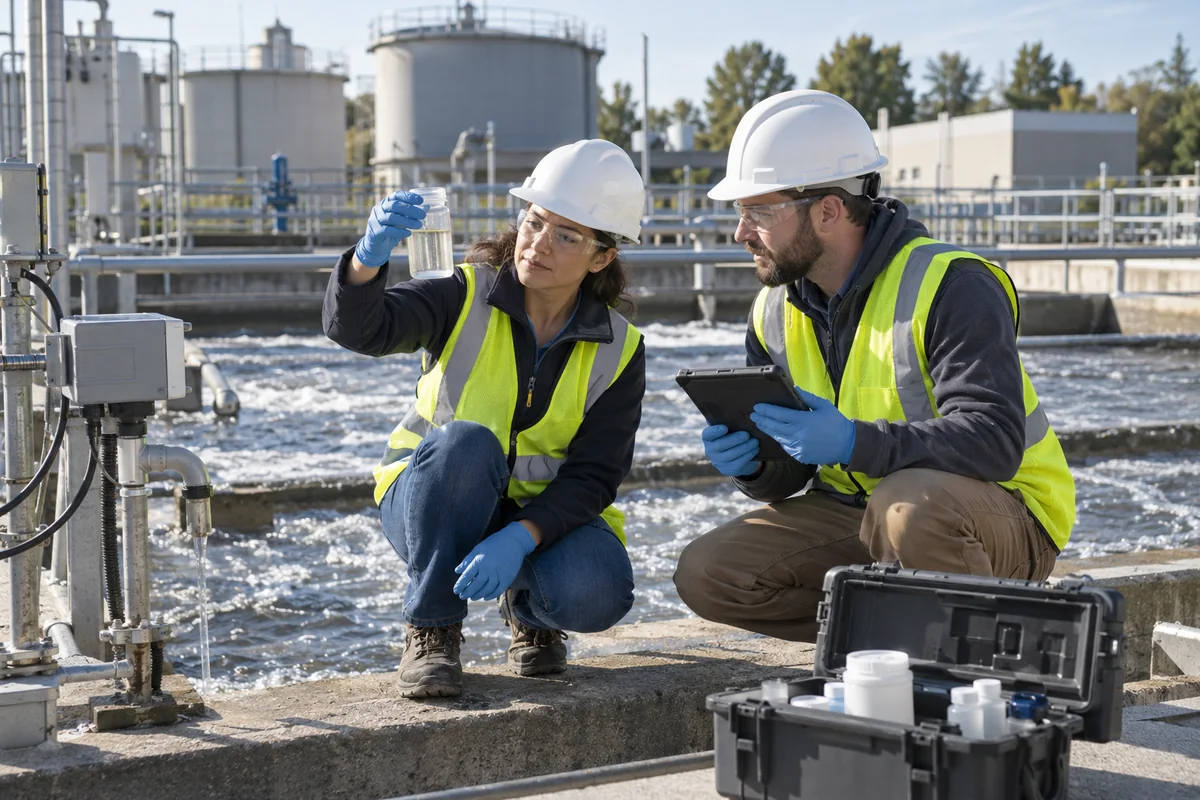
Model the water network, find where pressure drops, and see whether a pipe or pump change helps.
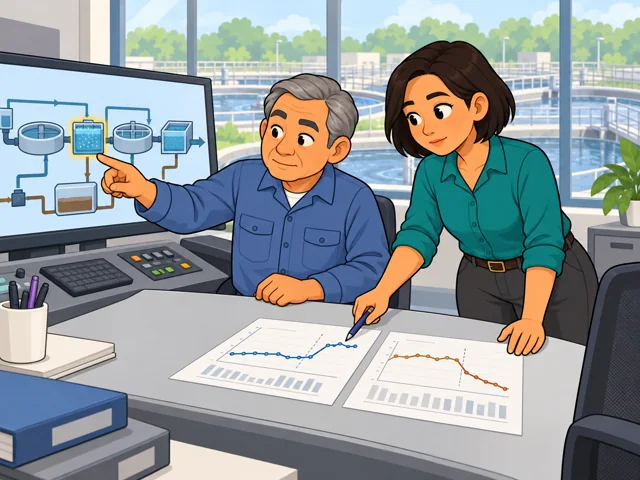
Set lab results beside plant logs, and when they worsen, study the process with operators and test fixes.
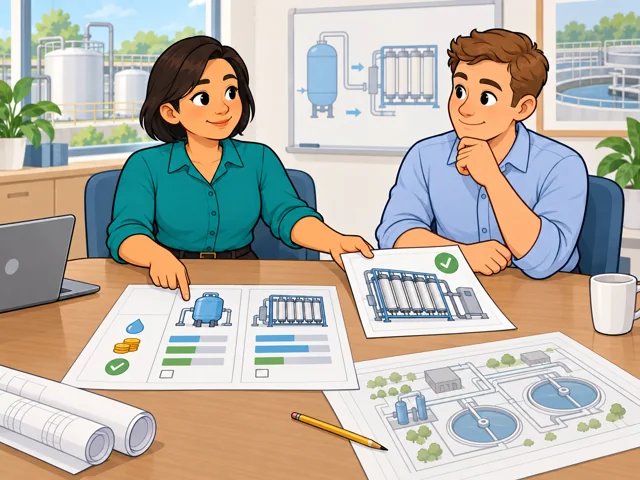
Weigh treatment methods and equipment against water-quality rules and cost, then recommend one for the plant upgrade.
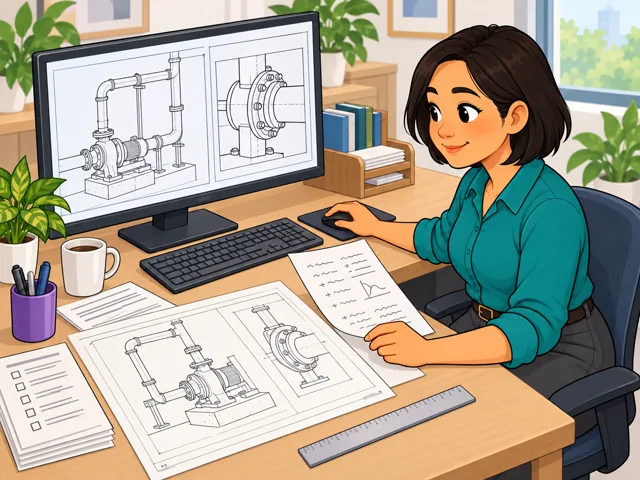
Map pipe routes and equipment details in drawing software, then write specifications telling contractors what to build.

In regulatory jobs, you check proposed treatment plans against permits and flag calculations or equipment to fix.
United States
Salary ranges differ by role and location.
Water-system repairs and treatment upgrades create project work, while public funding affects which projects move ahead.
Quick orientation
Engineering study provides the usual foundation for this work.
Salary ranges differ by role and location.
Water-system repairs and treatment upgrades create project work, while public funding affects which projects move ahead.
Software calculates pipe pressure and pumping energy. Drinking-water modeling tools can also connect models to live operating data.
You judge whether equipment will fit the plant's needs and work through design questions with operators and construction staff.
How far automated analysis will take over choosing designs remains uncertain, especially when actual system behavior differs from the model.
Pay in context
These national benchmarks cover civil engineers broadly, including water and wastewater engineers. They give you context for comparing jobs, rather than a specialty-only estimate or a starting-pay promise.
Median pay was $100,840 a year ($48.48 an hour). The lowest-paid 10% earned below $68,240; the highest-paid 10% earned above $163,220. These thresholds describe the workforce, not career stages.
Annual medians were $100,620 in engineering services, $102,440 in state government, and $113,640 in local government. Government figures exclude education and hospitals; these comparisons cover all civil-engineering specialties.
Civil-engineer employment is projected to grow 6%, with about 22,700 openings a year on average. Many openings replace people leaving the occupation or retiring.
The usual sequence is an engineering degree followed by a junior engineering job. Internships can add practical experience during college.
After entry
This starts where the entry routes leave off: early work, growing capability, and advancement or specialization. This path also has a credential or licensing boundary; see the requirements and limits.
Learn to produce calculations and drawings that others can check, and connect them with what you observe in the field.
Take an equipment recommendation through design review, contractor questions, and testing after installation.
With experience and applicable licensure, lead a treatment-upgrade project, guide junior engineers, or develop deeper expertise in treatment equipment and processes.
You prepare designs and construction documents for clients, then check work in the field. Some roles include extended travel to project sites.
In a treatment-process role, you stay close to an operating plant, working with operators on performance problems and improvements to existing equipment.
Your work centers on reviewing proposed facilities, resolving technical questions with designers, and inspecting treatment sites for compliance.
Try it
Sketch a water tank supplying three streets through pipes. Imagine water use doubles on one street. Mark where you would want pressure measurements, then compare a larger pipe with added storage. Write what you would need to know before choosing. Notice whether turning a service problem into design questions interests you.