
Career profile

Water/Wastewater Treatment Operator

Water treatment operators make raw water drinkable and clean wastewater before its release or reuse.

One shift can take you from testing a sample to adjusting a pump, checking an alarm and writing up results that regulators review.
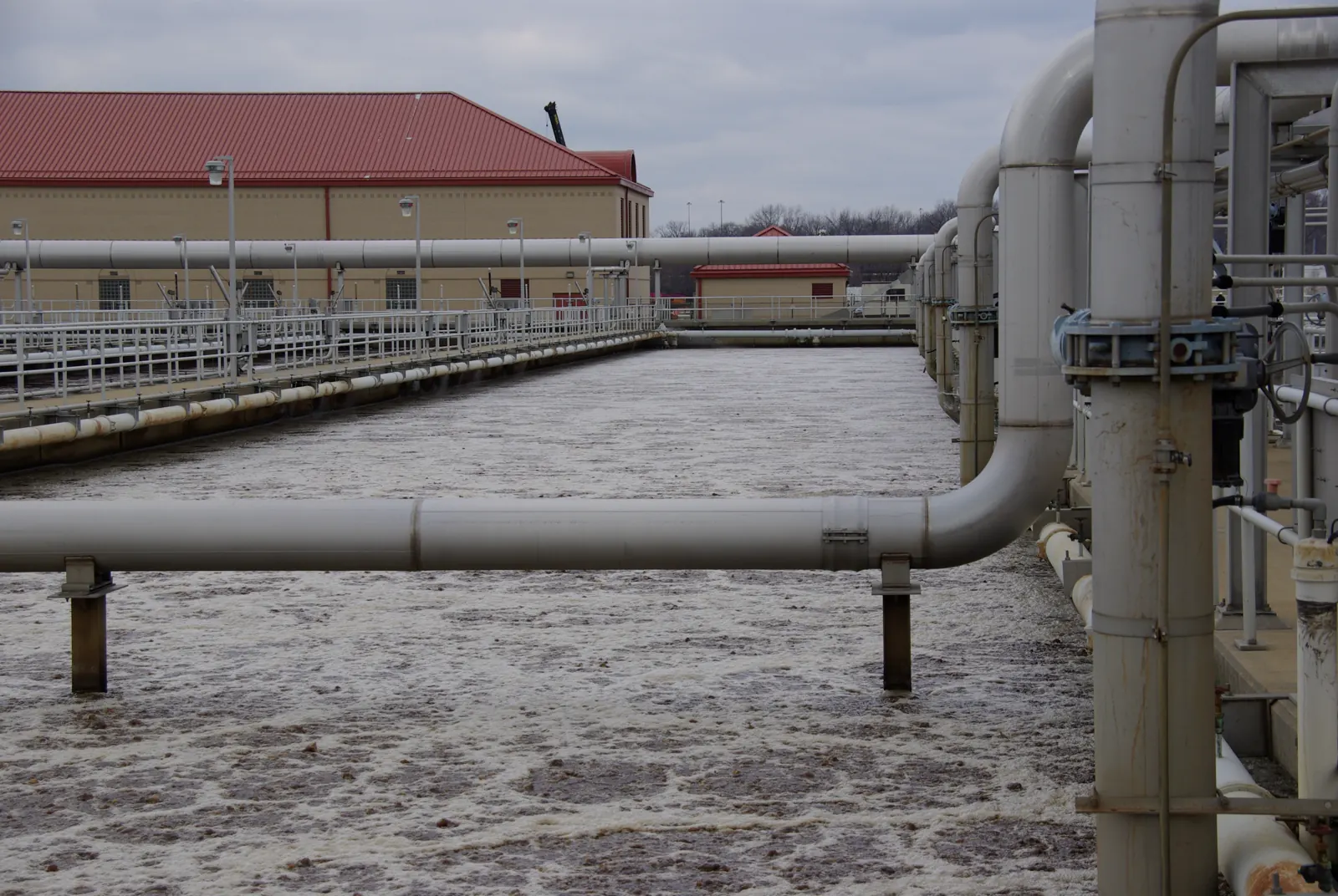
A wastewater facility operator collects a treatment-process sample.
NPS / Jacob W. Frank / Public domain

A day in the life

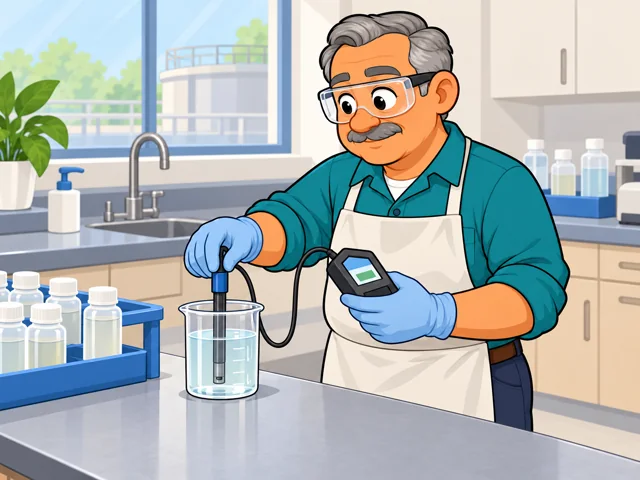
1An older operator wearing goggles and gloves tests a collected water sample with a handheld probe at a laboratory bench.

Sample and test the water

Collect water, wastewater or sludge samples for physical or chemical tests that show how well treatment works.
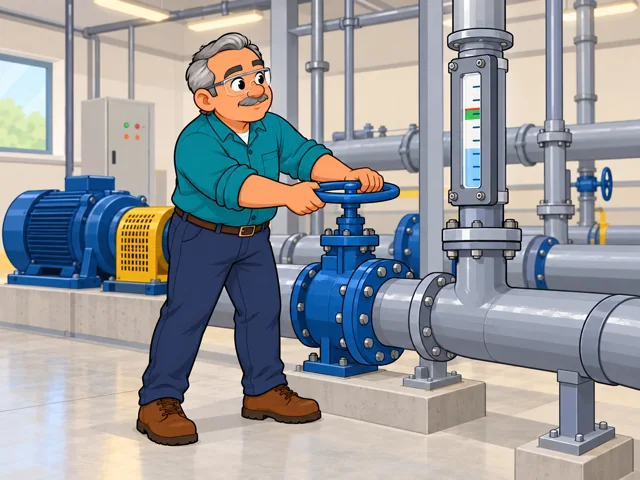
2The operator adjusts a pipe valve while checking a nearby flow indicator in the treatment plant's pump gallery.

Adjust pumps, valves and dosing

You run pumps, valves, chemical feeders and controls to keep flow and treatment conditions within target ranges.
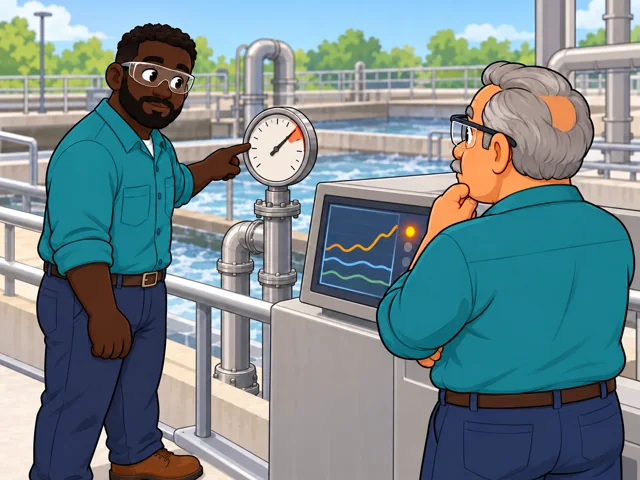
3The operator and a younger Black coworker with very deep warm-brown skin compare a changing screen trend with a nearby gauge to investigate a possible process problem.

Follow up on odd readings

Watch meters, gauges, alarms and screens, then follow up on readings hinting at failing equipment or changing load.
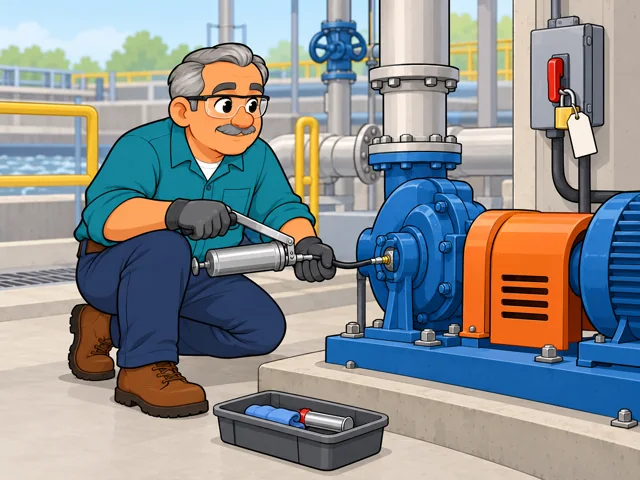
4The operator crouches beside a stopped, isolated pump and lubricates its bearing as part of routine maintenance.

Keep equipment ready to use

Inspect, clean, grease and make routine fixes to tanks, filter beds, treatment gear and safety equipment.

5Seated at an office desk, the operator checks paper logs while entering treatment readings, maintenance, test results, and discharge information into digital records.

Log readings and test results

Record readings, upkeep and test results, including wastewater discharge details required in compliance records for regulators.

Quick facts

Preparation

High school + long-term training

United States · Current BLS profile accessed 2026-09-18

Pay

$60,020 median

United States · May 2025

Outlook

-6% projected

United States · 2025-2035

Quick orientation

Preparation, pay & outlook

Preparation

High school + long-term training

A diploma or equivalent is typical, followed by long-term training under an experienced operator. Employers or local rules may require more.

Geography
United States
Period
Current BLS profile accessed 2026-09-18

Pay

$60,020 median

National median annual wage for this occupation in May 2025; it is not a starting-pay figure.

Geography
United States
Period
May 2025

Outlook

-6% projected

Employment is projected to decline from 2025 to 2035, with about 10,000 openings a year expected from replacement needs.

Geography
United States
Period
2025-2035

Fit, tradeoffs & changing tools

Things to weigh

  • Round-the-clock plants may schedule nights, weekends, rotating shifts, or emergency call-ins.
  • Expect some physical work around noise, odors, contaminants, slippery areas, machinery, and difficult-to-access equipment; protective gear and safety procedures matter.
  • Accurate readings and records carry real weight because treatment results, coworkers, and regulatory compliance can depend on them.

Where AI may help

Computerized control screens, sensors, alarms, and automatic logs can show plant conditions and organize operating records.

What people still lead

Operators still verify samples, interpret unusual readings, choose adjustments, troubleshoot equipment, and take manual control during malfunctions.

What we can’t predict yet

Automation may reduce staffing, but its pace and effect will vary by facility and task; monitoring may change without removing the need for field checks, maintenance, and response work.

Pay in context

Earnings

National figures give you a benchmark, but a local offer can differ with the employer, location, schedule, experience, and responsibility.

National midpoint

The median annual wage was $60,020, meaning half of workers in the occupation earned more and half earned less. The median hourly wage was $28.86.

Geography
United States
Period
May 2025
Pay basis
BLS Occupational Employment and Wage Statistics annual wage for SOC 51-8031

Observed wage spread

The lowest-paid 10 percent earned less than $39,110, while the highest-paid 10 percent earned more than $91,060. These thresholds are not entry and senior career stages.

Geography
United States
Period
May 2025
Pay basis
BLS Occupational Employment and Wage Statistics annual-wage percentiles for SOC 51-8031

What can move the number

BLS notes that wages within an occupation vary with experience, responsibility, performance, tenure, and geography. The national data do not establish a pay premium for any particular license or program.

Geography
United States
Period
Not stated
Pay basis
General BLS interpretation of occupational annual-wage variation

Getting started

Enter as a trainee

Long-term on-the-job trainingPaid
What the route involves
Work under an experienced operator while recording readings, taking samples, following safety procedures, and performing simple maintenance.
What it can lead to
Build the operating experience and plant familiarity needed to become fully qualified and, where allowed, complete licensing requirements while employed.
What to check
License class, exams, qualifying experience, and trainee authority vary by jurisdiction and may differ between drinking-water and wastewater work.

Study a related field first

Certificate, associate degree, or bachelor's degree, depending on the program
What the route involves
Complete related coursework such as environmental science or wastewater treatment technology before applying.
What it can lead to
Meet a preparation preference used by some employers and arrive with more background for plant training.
What to check
A school credential does not guarantee a job or replace the license, examination, and experience rules that apply in a particular jurisdiction.

A common route is supervised employment, but related education can strengthen an application. Neither route creates one nationwide license sequence.

After entry

Career paths

This starts where the entry routes leave off: early work, growing capability, and advancement or specialization.

  1. Get established

    Complete supervised plant training and the education, experience, and examination steps required for your assigned duties and jurisdiction.

  2. Handle more of the process

    Learn the facility's treatment stages, safety systems, controls, sampling routines, and manual procedures before working with less supervision.

  3. Advance or specialize

    Higher license levels may permit more complicated work without supervision; at large plants, highly licensed operators may move into shift supervision.

    • Build deeper capability in mechanical maintenance, process controls, or laboratory testing as the facility's work allows.

Where you can work

Drinking-water plants and systems

Work can move among indoor control areas, a laboratory, and outdoor treatment or distribution equipment. Because these systems operate continuously, some assignments include night, weekend, or on-call coverage.

  • Indoors
  • Outdoors
  • Lab
  • Shift work
  • On call
  • Safety-sensitive

Wastewater plants and systems

Control rooms and laboratories sit alongside outdoor tanks and treatment equipment. Odors, contaminants, slippery areas, and protective gear can be a more visible part of this setting.

  • Indoors
  • Outdoors
  • Lab
  • Shift work
  • Physical demands
  • Safety-sensitive

Small and large facilities

A small facility may give one operator broad responsibility across the system. A large plant is more likely to divide work among a shift team and specialized assignments.

  • Indoors
  • Outdoors
  • Shift work
  • On call

Try it

See whether the job clicks before you commit to the path.

Open a public drinking-water or wastewater process diagram. Trace one drop through the system, choose three points where an operator might read a gauge or take a sample, and make a one-page shift log showing what you would record and what change would make you investigate. Then ask whether following the process and interpreting its readings held your interest.

Stay safe: Use public diagrams or virtual materials only.

Explore more careers

Sources

  1. U.S. Bureau of Labor Statistics. Water and Wastewater Treatment Plant and System Operators. Accessed 2026-09-18.
  2. O*NET OnLine. 51-8031.00 - Water and Wastewater Treatment Plant and System Operators. Accessed 2026-09-18.
  3. U.S. Environmental Protection Agency. Operator Certification Program Management. Accessed 2026-09-18.
  4. U.S. Environmental Protection Agency. About NPDES. Accessed 2026-09-18.

Your message goes to the Great Jobs team. How we use your information