

Career profile

Wind Energy Engineer

Wind energy engineers design turbines and wind farms, then check how efficiently they make power.

One turbine's spot changes how much power the turbines downwind can make. Engineers weigh choices like that using engineering models, drawings and wind data.
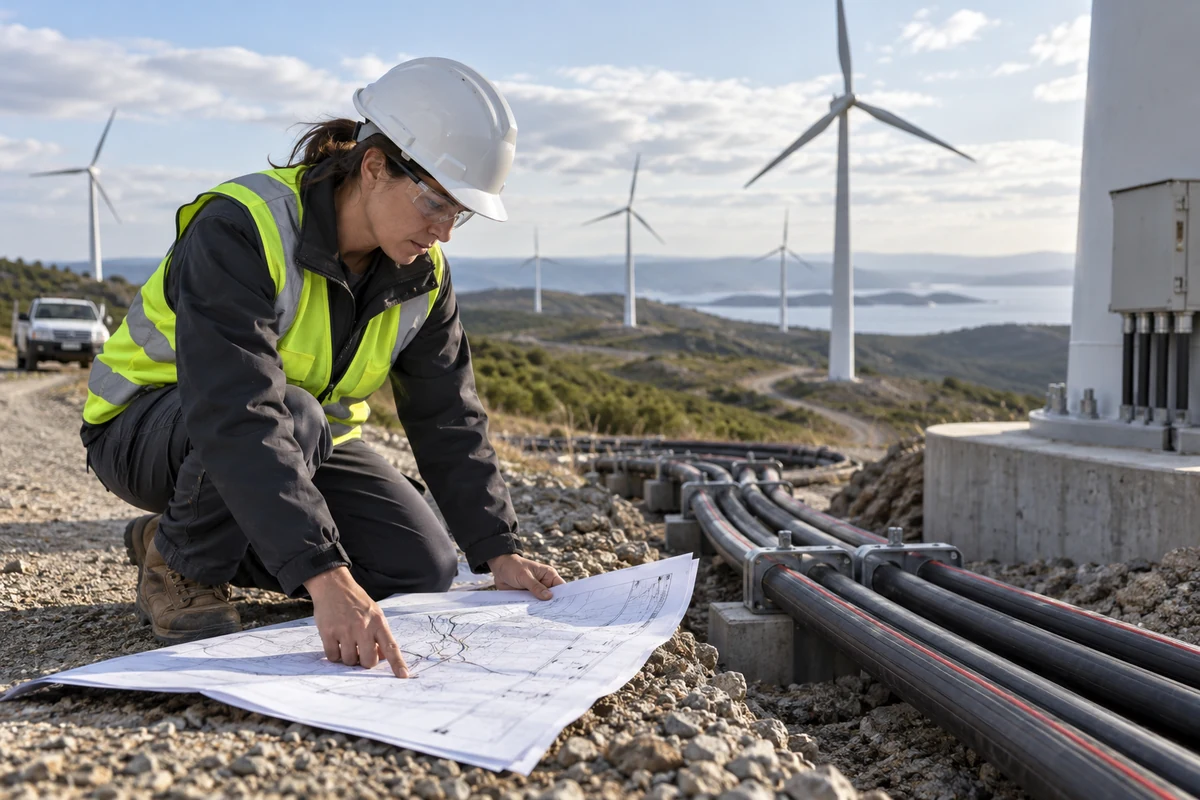
Wind engineer studies site plans beside a wind farm.

A day in the life

1A wind energy engineer examines an unusual spike in wind measurements beside a modeled electricity-production chart.

Flag odd readings in wind logs

Scan logged wind speeds, dig into any readings that look off, then model the site's likely power output.
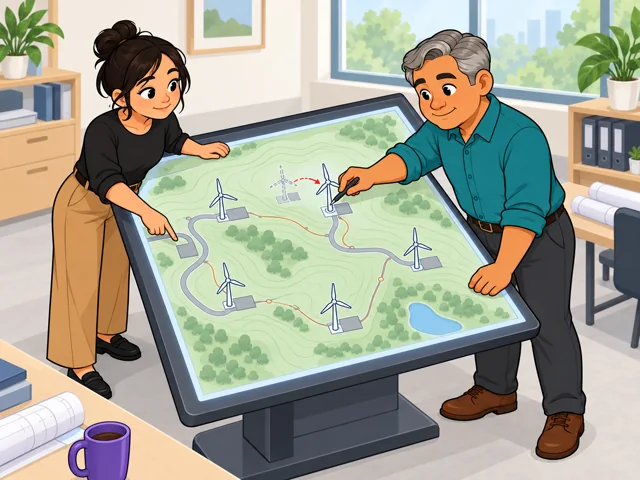
2An engineer repositions a turbine on a site drawing while a colleague checks clearance for the access road and crane pad.

Move a turbine on the plan

Move one turbine and rework the layout, leaving room for crane pads, access roads and power collection cables.

3An engineer and colleague compare a turbine tower's computer load analysis with a physical test-response plot.

Simulate a tower's strength by computer

Component designers simulate a tower or spinning part, then compare the design with physical test results.
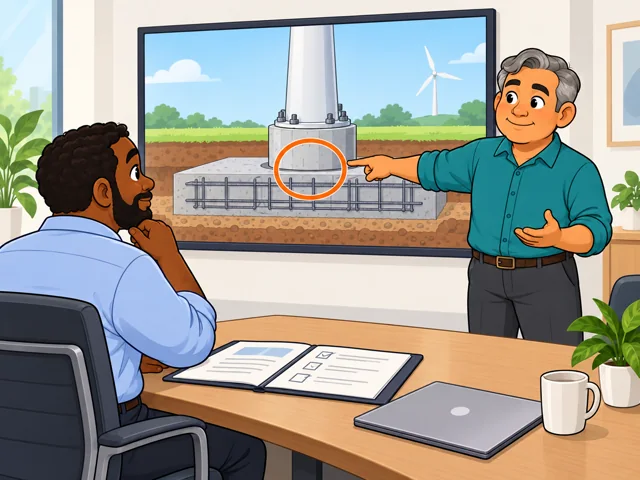
4A wind energy engineer explains a foundation connection that needs closer checking to a client reviewing a proposed wind project.

Review a turbine foundation model

In consulting roles, you study the model, then flag what the client needs to verify before deciding on financing.

Quick facts

Preparation

Usually an engineering bachelor's

United States

Pay

Not displayed

Pay depends on your engineering specialty, experience, and location.

Outlook

Not displayed

Explore openings by specialty, such as turbine design or wind plant engineering.

Quick orientation

Preparation, pay & outlook

Preparation

Usually an engineering bachelor's

Mechanical, electrical, civil, and aerospace engineering can lead into different wind specialties.

Geography
United States
Period
Not applicable

Pay

Not displayed

Pay depends on your engineering specialty, experience, and location.

Geography
United States
Period
Not applicable

Outlook

Not displayed

Explore openings by specialty, such as turbine design or wind plant engineering.

Geography
United States
Period
Not applicable

Fit, tradeoffs & changing tools

Things to weigh

  • Expect substantial time at a computer, checking calculations and writing up results.
  • A design that produces more electricity may also cost more to build or maintain. You may need to rework your preferred solution.

Where AI may help

Wind-plant software can compare turbine layouts and model how changing one turbine's direction affects airflow reaching others.

What people still lead

You choose realistic assumptions and weigh energy gains against structural demands, construction costs, and operating costs.

What we can’t predict yet

How much design selection can be automated depends on how reliably models capture real wind and site constraints. That boundary is still developing.

Pay in context

Earnings

Turbine-design salaries give you a concrete starting reference, but the figures below cover one specific role.

Early-career turbine design

At a turbine manufacturer in Greenville, South Carolina, an early-career wind mechanical engineering role advertises $72,000–$108,000 a year. That is about $34.62–$51.92 per hour when divided by 2,080 hours, not an hourly pay offer or a national salary spread.

Geography
Greenville, South Carolina, United States
Period
Posting retrieved October 4, 2026
Pay basis
Advertised annual salary; calculated hourly equivalent; discretionary bonus separate

What changes an offer

For that role, experience, education, and skills affect the offer; geographic adjustments apply in some locations. A discretionary annual bonus is separate from salary.

Geography
United States
Period
Posting retrieved October 4, 2026
Pay basis
Employer-specific salary factors and discretionary bonus

Getting started

Earn an engineering degree

What the route involves
Study mechanical, electrical, civil, or aerospace engineering. Use design projects to connect that foundation to turbines or wind farms.
What it can lead to
You can pursue engineering openings matching your discipline, including graduate wind-engineering programs.

Join a graduate engineering rotation

Two years in GE Vernova's advertised 2027 program.Paid
What the route involves
After your degree, rotate through wind engineering projects with technical training and mentoring.
What it can lead to
Develop experience for design, reliability, systems, or testing work.
What to check
This program accepts specified engineering majors from an ABET-accredited university; ABET is the engineering education accreditor. It also requires unlimited U.S. work authorization without sponsorship.

Build an engineering foundation, then learn the wind systems used in your chosen specialty.

After entry

Career paths

This starts where the entry routes leave off: early work, growing capability, and advancement or specialization. This path also has a credential or licensing boundary; see the requirements and limits.

  1. Get established

    Learn your team's models and checking methods with an experienced engineer reviewing your work.

  2. Connect the design decisions

    Take responsibility for a larger analysis, showing how changes affect both electricity production and project costs.

  3. Become a technical specialist

    Progress toward senior or principal work, such as reviewing complex turbine foundations and helping other engineers build that expertise.

Where you can work

Turbine manufacturer

You work within a component team that follows hardware from design through testing and field problems. Feedback from operating turbines can send you back to the model.

  • Office

Engineering consultancy

Your client needs a defensible assessment of a project. Foundation specialists use structural models to review designs and explain risks that matter to financing decisions.

  • Office

Try it

See whether the job clicks before you commit to the path.

Sketch a pretend wind farm with six turbines, a road, and a cable connection. Draw the main wind direction, then make a second layout that puts fewer turbines directly behind others. Compare road and cable lengths. Which compromise would you investigate first, and what measurements would you need? Notice whether balancing these choices interests you.

Stay safe: Keep this a paper exercise; it is not a construction plan.

Explore more careers

Sources

  1. O*NET OnLine. Wind Energy Engineers — 17-2199.10. Accessed 2026-10-04.
  2. U.S. Bureau of Labor Statistics. Occupational projections and worker characteristics. Accessed 2026-10-04.
  3. GE Vernova. GE Vernova Wind Mechanical Engineer — R5052095. Accessed 2026-10-04.
  4. GE Vernova. Wind Edison Engineering Development Program — US 2027. Accessed 2026-10-04.
  5. U.S. Department of Energy. Wind Career Map Text Version. Accessed 2026-10-04.
  6. U.S. Department of Energy. Career Map: Frequently Asked Questions. Accessed 2026-10-04.
  7. National Renewable Energy Laboratory. Systems Engineering. Accessed 2026-10-04.
  8. National Renewable Energy Laboratory. The Leading Edge: April 2024 Wind Energy Newsletter. Accessed 2026-10-04.
  9. DNV. Hieu — Principal Structural Engineer. Accessed 2026-10-04.
  10. National Council of Examiners for Engineering and Surveying. Licensure. Accessed 2026-10-04.

Your message goes to the Great Jobs team. How we use your information