Usually about 7 years
Bachelor’s degree, DPT, then a state license.
Career guide
You help people move better, feel stronger, and get back to the parts of life they miss.
If you like helping people move better and bounce back after injury, this job turns science, coaching, and hands-on care into one career.
Bachelor’s degree, DPT, then a state license.
Lower-end BLS pay for people entering the field.
Higher-end BLS pay once you have experience.

Review referrals and patient history before the session
Check movement, balance, pain, and strength
Guide exercises and hands-on treatment to help the patient move better
Keep people motivated, fix their form, and change the plan when progress stalls.
Update home exercise plans and progress notes
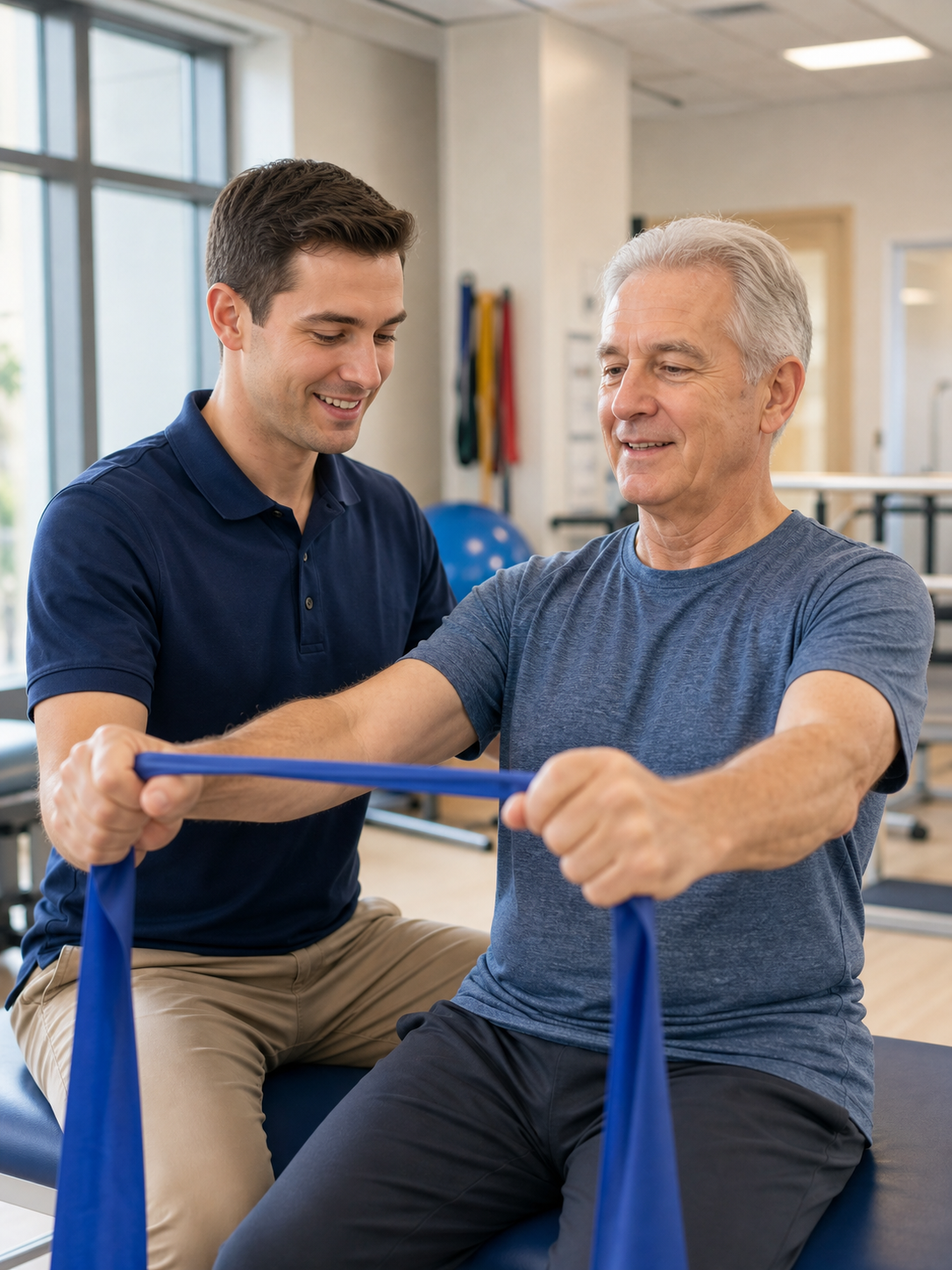
AI can help with paperwork, reminders, scheduling, and rough exercise-plan drafts.
AI can help with exercise-plan drafts, reminders, and documentation, but the real job depends on hands-on assessment, patient coaching, and adjusting treatment in the room. The physical connection between therapist and patient is what makes progress happen.
There is no strong sign that AI is about to replace physical therapists. The job depends on touch, trust, observation, and adjusting in real time.
BLS May 2024 wage data. Entry is the 10th percentile, mid is the 50th, senior is the 90th. Pay varies by setting — hospitals and pediatric clinics often pay differently than outpatient practices. Growth and openings use BLS 2024 to 2034 projections.
Physical therapists must earn a Doctor of Physical Therapy (DPT) — typically 3 years of graduate study after a bachelor's with science prerequisites, so about 7 years total from starting college. A state licensing exam is required after graduation. Some students start at a community college, transfer into a 4-year program, and then enter a DPT. A few accelerated programs shorten the prerequisite phase.
Training and advancement
This is a common route, not a promise or the only way forward. Check local requirements before choosing a program.
Complete college prerequisites, earn a Doctor of Physical Therapy degree, then pass the national exam and meet your state’s licensing rules.
Begin licensed patient care in a setting such as a clinic, hospital, school, or home health service.
With experience, some physical therapists move into management or open a private practice; neither step is required.
Sources and review
Independent review found the pay and outlook mapping consistent with the cited BLS occupation. State licensing details still require local checking.
May 2024 national BLS Physical Therapists percentiles.
BLS 2024–34 national projection for Physical Therapists.
BLS requires a Doctor of Physical Therapy degree for entry.
Every state requires licensure; the exact process varies by state.
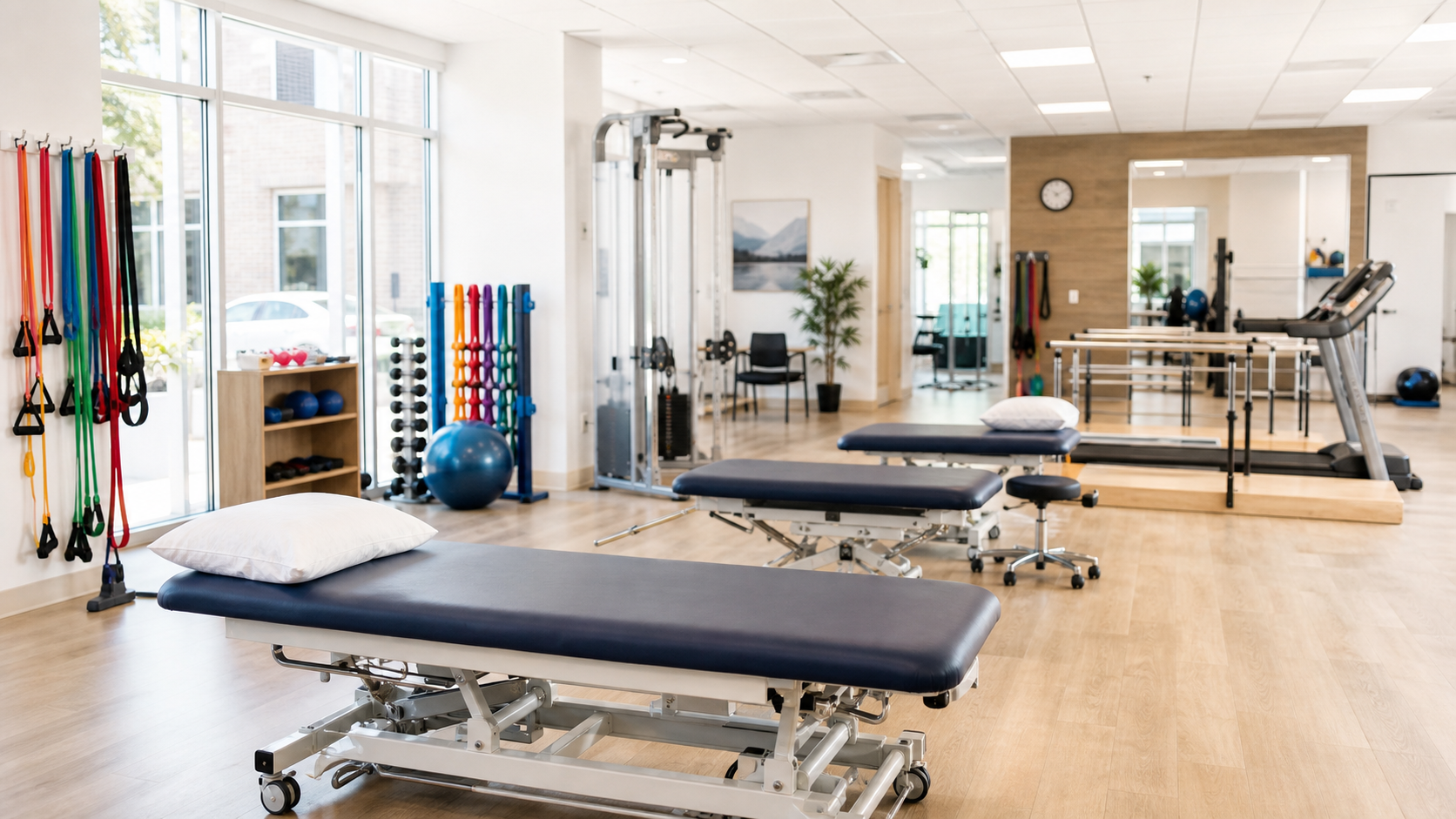


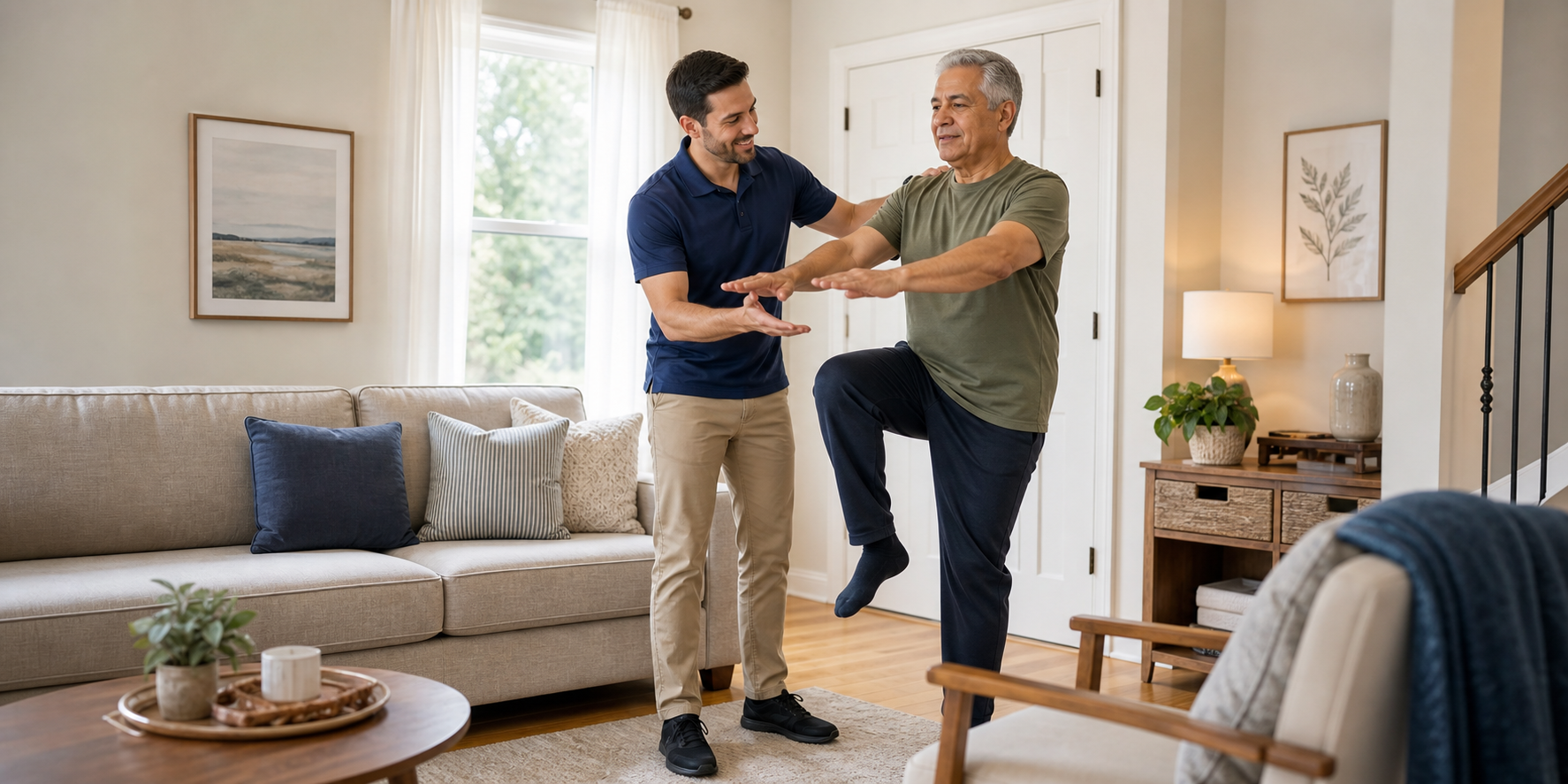
Try it
Watch someone learn a stretch or exercise and notice how much of the job is coaching, observing, and correcting in real time.